Three Guides Every Serious Builder Client Should Read
✦
Written from real experience — not marketing. These guides exist because we believe informed clients make for better projects and better outcomes for everyone.
Guide 01
10 Questions to Ask Before You Choose a Builder
Most people choose a luxury builder based on marketing. This guide gives you the ten questions that actually separate great builders from the rest — and what to listen for in the answers.
What's Inside
Why "years in business" is the wrong metric
How to evaluate a builder's financial transparency
The one question that reveals how they handle problems
What a great builder's trade network looks like
Why This Matters
The luxury home building market is full of builders who look impressive on the surface — slick websites, beautiful photography, impressive credentials. But selecting the wrong builder is one of the most expensive mistakes you can make. These ten questions are designed to cut through the presentation and reveal who you're actually dealing with.
The 10 Questions
How many projects are you currently managing? — A builder managing 20+ projects simultaneously cannot give yours the attention it deserves. The right answer depends on firm size, but less is generally more at the luxury level.
Can I see your last three budgets versus final costs? — A builder confident in their estimating will show you this. One who refuses or deflects is hiding something.
Who will I actually be talking to throughout the project? — If the answer is "your project manager" and the principal is never mentioned, expect to feel like a number.
How do you handle scope changes? — Every project has them. The process matters as much as the answer. You want a clear, documented change-order process.
Can I speak to your last three clients? — Not testimonials on a website. Direct phone conversations. Any builder worth working with will welcome this.
Who are your top five trade partners and how long have you worked with them? — Long-term trade relationships signal trust, payment reliability, and consistent standards.
What is your process when something goes wrong on site? — Problems happen on every build. How a builder answers this tells you more about their character than anything else.
How do you structure your fees and what is included? — Beware of low base estimates with high "management fees" added later. Get the full cost structure in writing upfront.
What does your pre-construction process look like? — Builders who skip formal pre-construction are setting you up for budget surprises. This phase should be thorough and documented.
What homes have you built that I can visit in person? — Photos are curated. Visiting a completed home — ideally with the client present — tells you everything about real quality.
The best builders will welcome every one of these questions. The ones who don't are telling you something important.
Guide 02
Understanding Pre-Construction: Where Projects Are Won or Lost
The most important phase of a luxury home build happens before any construction begins. Most clients don't know what good pre-construction looks like — or what they're missing if they skip it.
What's Inside
What pre-construction actually includes
Why 80% of costly problems are pre-construction failures
How to evaluate a pre-construction budget
The permit timeline mistake that costs months
The Most Expensive Phase Nobody Talks About
Ask most luxury home clients when their project officially began and they'll tell you the groundbreaking date. Ask their builder and they'll give a date six to twelve months earlier. That gap — the pre-construction phase — is where everything that determines the quality, cost, and timeline of your build is actually decided.
What Good Pre-Construction Includes
True cost modeling: Not an optimistic estimate, but a detailed line-item budget built around your actual design program, site conditions, and current market rates — with proper contingencies built in from day one.
Site due diligence: Soil testing, drainage assessment, setback and easement review, utility access, and orientation analysis. These determine what your site will actually cost to build on — information you need before you buy.
Design team alignment: Selecting the right architect, briefing them on buildability constraints, and establishing a collaborative process between design and construction from the start.
Permit and approvals mapping: A complete timeline of all required permits, HOA approvals, and regulatory sign-offs — mapped to your target construction start date so nothing comes as a surprise.
Every dollar saved in pre-construction is worth three dollars saved during construction. The planning phase is where fortunes are protected — or quietly lost.
The Most Common Pre-Construction Mistake
The single most common and costly mistake we see is failing to map permit and approval timelines at the design stage. Permitting in many jurisdictions takes six to eighteen months. Clients who discover this after their architect has been designing for four months lose that time entirely — and often lose their chosen trades to other projects in the interim.
A good pre-construction strategy maps the permit timeline on day one and works backwards from your target construction start. This alone is worth more than the cost of the entire pre-construction engagement.
Guide 03
Transitional Architecture: How to Get the Balance Right
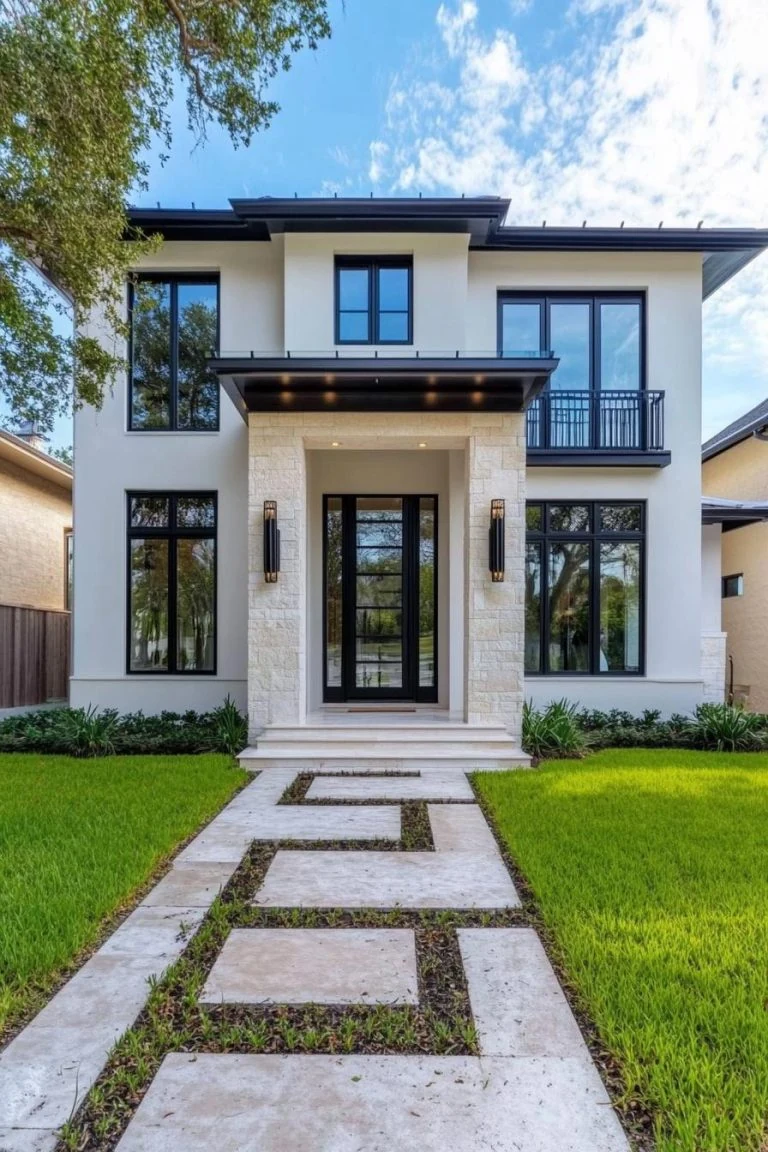
Transitional architecture is the most popular style in luxury residential — and the most frequently misunderstood. This guide explains what it actually means, what it requires to execute well, and the mistakes that make it feel generic instead of extraordinary.
What's Inside
What truly defines transitional architecture
The classic elements that anchor a transitional home
The modern elements that make it feel current
The most common mistakes and how to avoid them
What Transitional Really Means
Transitional architecture is often described as "a blend of traditional and contemporary" — which is accurate but not very useful. The more precise definition is this: a home that uses the proportions, permanence, and warmth of classical design as its foundation, while replacing traditional ornamentation with cleaner, more restrained detailing.
Done well, a transitional home feels both timeless and current. It has the gravitas of a home that's been there a hundred years, with the livability of a home designed for how we actually live today. Done poorly, it feels like neither — generic, indecisive, and forgettable.
The Classical Elements That Ground a Transitional Home
Symmetry and formal proportion: The bones of a transitional home are classical. Balanced elevations, centred entries, and considered window placement give the home its sense of permanence.
Natural materials with character: Stone, brick, timber, and plaster. These materials age beautifully and connect the home to its landscape in a way that synthetic materials never can.
Architectural millwork: Crown mouldings, wainscoting, coffered ceilings, and panelling — deployed with restraint. The key is scale: transitional millwork is simpler in profile than traditional, but still present and architectural.
The Modern Elements That Keep It Current
Open-plan living: Traditional homes compartmentalise; transitional homes open up. The great room — a kitchen, dining, and living space flowing together — is the heart of every transitional home we build.
Clean hardware and fixtures: Where a traditional home uses ornate hardware, a transitional home chooses simple, architectural hardware in unlacquered brass, matte black, or brushed nickel.
Steel windows: Nothing signals transitional architecture more clearly than steel-framed windows. They read as both industrial and refined — a perfect metaphor for the style itself.
The art of transitional architecture is knowing what to include and what to leave out. Restraint is not minimalism — it's editing.
The Most Common Mistake
The most common mistake in transitional design is treating it as a mixing exercise — taking a list of traditional elements and a list of contemporary elements and combining them. This produces homes that feel like they couldn't decide what they wanted to be. The best transitional homes have a clear point of view: they lead with one sensibility and season it with the other. Choosing which one leads is the most important design decision you'll make.
Budget Guide
What Does a Luxury Home Actually Cost?
✦
We believe in financial honesty from the very first conversation. Below are realistic cost ranges for different project types — not lowball estimates designed to get you in the door, but real numbers based on current market conditions.
Important Note
These ranges reflect current costs in a typical mid-to-high cost market. Your actual investment will vary based on site conditions, design complexity, material selections, and local labour rates. These figures are a starting point for conversation — not a quote. Contact us for a project-specific estimate.
$2M – $3M
New Build · 3,000–4,500 sq ft
New Build
Custom architectural design and full engineering
Quality structural and mechanical systems
Semi-custom cabinetry and millwork
Natural hardwood or stone flooring throughout
Quality fixtures and tile throughout
Landscaping and hardscape included
Standard smart home features
Outdoor deck or patio included
At this level, you're building a genuinely custom home with quality finishes throughout. The primary trade-offs are square footage and degree of customization — bespoke millwork, imported stone, and resort outdoor amenities will push toward the top of this range. An excellent starting point for families building their first fully custom home.
$3M – $5M
New Build · 4,500–7,000 sq ft
New Build
Fully bespoke architectural design and engineering
Custom millwork and cabinetry throughout
Imported natural stone and hardwood flooring
Steel Crittall-style windows available
Full smart home integration
Resort-style pool and spa at upper end
Outdoor entertaining pavilion or kitchen
Premium landscape architecture
This is where a project transitions from "luxury" to "estate." Every finish is bespoke, every material is premium, and the home begins to include resort-level outdoor amenities as standard. The breadth of custom detailing — not square footage alone — is what primarily drives cost in this range.
$500K – $2M
Renovation or Addition · Scope dependent
Renovation
Full interior transformation
Structural additions or new wings
Resort outdoor living and pool
Full systems replacement (HVAC, electrical)
Custom millwork and cabinetry throughout
High-end finishes and fixtures
Renovation costs vary based on scope. A full home transformation of a 4,000 sq ft home typically runs $350–$600 per sq ft for a true luxury result. A resort outdoor addition — pool, pavilion, outdoor kitchen — typically runs $300K–$800K depending on scope. Structural additions are priced similarly to new build per sq ft.
Build Timeline
What an 12-Month Build Actually Looks Like
✦
One of the most common sources of anxiety in luxury home building is not knowing what's coming next. This visual breaks down a typical 12-month new build into phases, milestones, and what you should expect at each stage.
Month 1–2
Discovery & Pre-Con
Vision alignment · Budget modeling · Site due diligence
Month 2–3
Design & Architecture
Schematic design · Design development · Material selection
Month 3–5
Permitting
Permit applications · Engineering sign-offs · HOA approvals
Month 5–6
Site & Foundation
Site prep · Excavation · Foundation · Underground utilities
Month 6–10
Structure & Envelope
Framing · Roofing · Windows · Mechanical rough-in
Month 9–12
Finishes & Handover
Interior finishes · Millwork · Landscaping · Punch list
Month 1
First Consultation
Your project officially begins. Vision is aligned, rough budget is established, and the pre-construction roadmap is set.
Month 5
Groundbreaking
All permits approved, design finalized, trade contracts signed. The physical build begins. This moment feels earned — because it is.
Month 12
Handover Day
Your home is complete. We walk through every space together, hand over your home manual, and celebrate what we built.
Insights
From the Field — What We've Learned
Site Selection · Pre-Construction
Why Your Lot Matters More Than Your Budget
Most clients spend months agonizing over their budget and hours evaluating their site. It should be the other way around. The land you build on will determine the ceiling of what's possible — no matter how much you spend.
December 2024 · 6 min readRead Article
02
Renovation · Investment
5 Renovations That Add Real Value — And 3 That Don't
After fifty-plus property projects, I've learned which improvements the market actually rewards and which ones only benefit the person living there.
03
Building Process · Advice
The Conversation You Should Have With Your Builder Before You Sign Anything
There's one conversation that separates projects that go smoothly from those that don't — and almost nobody has it at the right time.
The best next step is a direct conversation. No pressure, no pitch — just an honest discussion about your project and what it would actually take to build it right.
10 Questions to Ask Your Builder Before You Sign Anything
What every serious homeowner in New Jersey should know before committing to a $2M+ project — including the answers that separate builders worth working with from those who aren't.
✦ The one question that reveals everything about a builder's integrity
✦ What a good answer sounds like — and what to watch out for
✦ How to protect your budget and timeline before you commit
Get the free guide
No spam. No sales calls. Just the guide, delivered to your inbox.
Legal
Privacy Policy
Last updated: March 2026
TGV Homes LLC ("TGV Homes", "we", "us", or "our") is committed to protecting your privacy. This Privacy Policy explains how we collect, use, and safeguard your personal information when you visit tgvhomes.com or contact us.
Information We Collect
We collect information you provide directly to us, including:
Name, email address, and phone number when you submit a contact or enquiry form
Project details and budget information you choose to share with us
Email address when you request a free guide or resource download
We may also collect certain information automatically when you visit our website, including your IP address, browser type, referring URLs, and pages visited. This information is used solely to improve the website experience.
How We Use Your Information
We use the information we collect to:
Respond to your enquiries and communicate about potential projects
Send you the resources or guides you have requested
Occasionally share relevant project updates or company news, where you have indicated interest
Improve our website and services
We do not sell, rent, or share your personal information with third parties for their marketing purposes.
Email Communications
If you submit a form or request a download, you may receive follow-up communications from TGV Homes. You may opt out of these at any time by replying to any email with "Unsubscribe" or by contacting us directly at contact@tgvhomes.com.
Data Security
We take reasonable steps to protect your personal information from unauthorized access, use, or disclosure. However, no method of transmission over the internet is completely secure, and we cannot guarantee absolute security.
Cookies
Our website may use basic cookies to improve your browsing experience. These are small text files stored on your device. You can disable cookies through your browser settings at any time.
Third-Party Links
Our website may contain links to third-party websites, including Instagram, TikTok, and Houzz. We are not responsible for the privacy practices of those sites and encourage you to review their policies.
Children's Privacy
Our website is not directed at children under the age of 13, and we do not knowingly collect personal information from children.
Contact Us
If you have questions about this Privacy Policy or your personal information, please contact us at: TGV Homes LLC 100 Overlook Drive, 2nd Floor, Princeton, NJ 08540 contact@tgvhomes.com · (609) 848-1516
Legal
Terms of Use
Last updated: March 2026
By accessing and using tgvhomes.com (the "Site"), you accept and agree to be bound by these Terms of Use. If you do not agree, please do not use the Site.
Use of the Site
This Site is provided by TGV Homes LLC for informational purposes. You may use the Site for lawful purposes only. You agree not to use the Site in any way that could damage, disable, or impair it, or interfere with any other party's use of the Site.
Intellectual Property
All content on this Site — including text, photography, renders, graphics, logos, and design — is the property of TGV Homes LLC or its content suppliers and is protected by applicable copyright and intellectual property laws.
You may not reproduce, distribute, republish, display, or transmit any content from this Site without the prior written permission of TGV Homes LLC. Unauthorized use of our images, project photography, or written content is strictly prohibited.
Project Photography & Renders
All project photography, architectural renders, and site imagery featured on this website are proprietary to TGV Homes LLC. These images may not be downloaded, saved, reproduced, or used for any purpose without express written permission.
No Solicitation
The information on this Site does not constitute a binding offer or contract. Enquiries submitted through this Site initiate a conversation only and do not create any obligation on the part of TGV Homes LLC until a formal written agreement is executed.
Accuracy of Information
We endeavour to ensure that the information on this Site is accurate and up to date. However, project details, pricing ranges, timelines, and availability are subject to change without notice. Investment ranges shown are indicative only and will vary based on project specifics.
Limitation of Liability
To the fullest extent permitted by law, TGV Homes LLC shall not be liable for any indirect, incidental, or consequential damages arising from your use of, or inability to use, this Site or its content.
Governing Law
These Terms of Use are governed by the laws of the State of New Jersey, without regard to its conflict of law provisions. Any disputes arising under these terms shall be resolved in the courts of Mercer County, New Jersey.
Changes to These Terms
We reserve the right to update these Terms of Use at any time. Changes will be posted on this page with an updated date. Continued use of the Site constitutes acceptance of the revised terms.
Contact Us
For questions regarding these Terms of Use: TGV Homes LLC 100 Overlook Drive, 2nd Floor, Princeton, NJ 08540 contact@tgvhomes.com · (609) 848-1516